From a Farm Outside Warwick to Franchise Management to AI Products
The origin story: growing up on a cattle and sheep farm, finding franchise operations, and why I'm now building AI tools. The thread that connects it all.
The first business I ever ran was a cattle and sheep farm outside Warwick, QLD. I say "ran" loosely — I was a kid, and my parents ran it. But on a farm, everyone works. By the time I was twelve I could drench sheep, move cattle between paddocks, fix a fence in the dark, and operate machinery that would make a modern OH&S officer pass out.
I didn't know it then, but the farm was teaching me everything I'd later use in franchise operations and product building. Systems. Routines. Working with unreliable variables — weather, livestock prices, broken equipment — and still getting a result.
Warwick is about two hours southwest of Brisbane. Small town. 15,000 people. The kind of place where everyone knows your family and the pub is the social infrastructure. Growing up there gave me a work ethic that I genuinely don't think I could have developed anywhere else.
On a farm, cause and effect are brutally immediate. If you forget to close a gate, cattle get out. Not "might" get out — they're gone. If you don't maintain the water troughs, stock go without water in 38-degree heat. There's no committee meeting about it. There's no retrospective. You just fix it and learn.
That directness shaped how I approach everything. I don't have much patience for analysis paralysis or meetings that don't end in a decision. That's the farm kid in me.
After school, I moved to the Gold Coast and landed in QSR — quick service restaurants. Guzman y Gomez specifically. I worked my way up through store-level management, then multi-site management, then into the Franchise State Manager role where I was responsible for franchisee performance across Queensland.
The jump from farm work to restaurant management seems random, but the core skills are identical. Roster management is just a different version of planning which paddocks get worked and when. Food cost control is the same discipline as managing feed costs per head. Team leadership is team leadership whether you're dealing with a 17-year-old on their first shift or a farm hand who's been doing the job longer than you've been alive.
At GYG, I found my thing. Multi-site operations. The challenge of making multiple locations perform consistently when each one has different staff, different customers, different local dynamics. I loved the puzzle of it.
My biggest contribution was building the Operations Review Cycle — a repeating framework for assessing franchisee performance, triggering coaching interventions, and making expansion decisions based on data rather than gut feel. That system now runs across 200+ GYG locations. It's not glamorous work, but it's the kind of work that quietly moves millions of dollars in the right direction.
Managing stores in Broadbeach, Bundall, and Palm Beach taught me the reality of multi-site management. You can't be everywhere. The temptation is to try — to bounce between sites putting out fires. But that just makes you exhausted and ineffective. The real skill is building systems and people that perform whether you're there or not.
The thread connecting the farm, franchise operations, and what I'm building now is simple: I build systems that work without me.
On the farm, the irrigation system had to work when nobody was watching. In franchise operations, the review cycle had to produce consistent results across hundreds of locations I couldn't personally visit. In AI product development, the tools I build have to run autonomously for customers who are too busy to babysit them.
Same principle. Different scale. Different tools.
About 18 months ago, I started building AI products on the side. Not because I wanted to be a tech founder — I'm not one, and I don't pretend to be. I started building because AI finally made it possible to create the kind of automated systems that small business owners actually need.
A plumber on the Gold Coast needs a system that handles his Google reviews while he's under a house. A solar installer needs ad campaigns that optimise themselves. A franchise owner needs a compliance tracker that flags issues before they become audit failures. AI makes all of that possible for a solo builder to create.
NourishRx was my first serious product — AI meal plans for Australians on GLP-1 medications. Built the whole thing in a weekend. Claude API for meal plan generation, Netlify for hosting, Stripe for payments, Resend for email delivery. Three pricing tiers. It's not going to make me rich, but it proved that I could go from idea to revenue-generating product in 48 hours.
I've since built an AI marketing service for solar installers, a personal AI agent called OpenClaw that runs on a Mac Mini in my office, and explored half a dozen other ideas at various stages of validation.
The people who succeed in this next phase of AI aren't going to be the ones with the most technical sophistication. They're going to be the ones who understand real business problems deeply enough to build the right solution. Operations people. Industry people. People who've spent years in the trenches.
That's why I'm building in public now. The farm kid who fixes fences and the franchise operator who builds review cycles and the AI builder who ships products in a weekend — they're all the same person applying the same principle.
Build systems. Make them work without you. Move on to the next problem.
If any of this resonates, I'd love to hear your story. Find me on LinkedIn or email me at daine@dainereid.com.
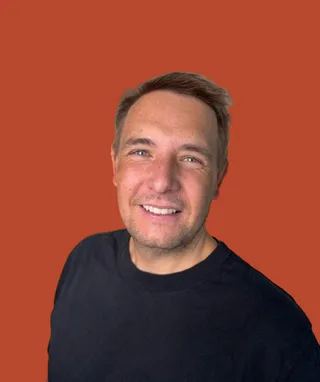
Gold Coast operator-turned-builder. Ex–State Ops Manager at Guzman y Gomez (QLD/NT) who launched McDonald's McDelivery across 200+ restaurants — now building AI tools for trades and small business.